All supported crypto
“Ledger = peace of mind. I'm sure some of us know that unsettling feeling when you know you need a Ledger but haven't quite organized yourself to get it sorted. If I did it all again, I'd start with having a Ledger.”
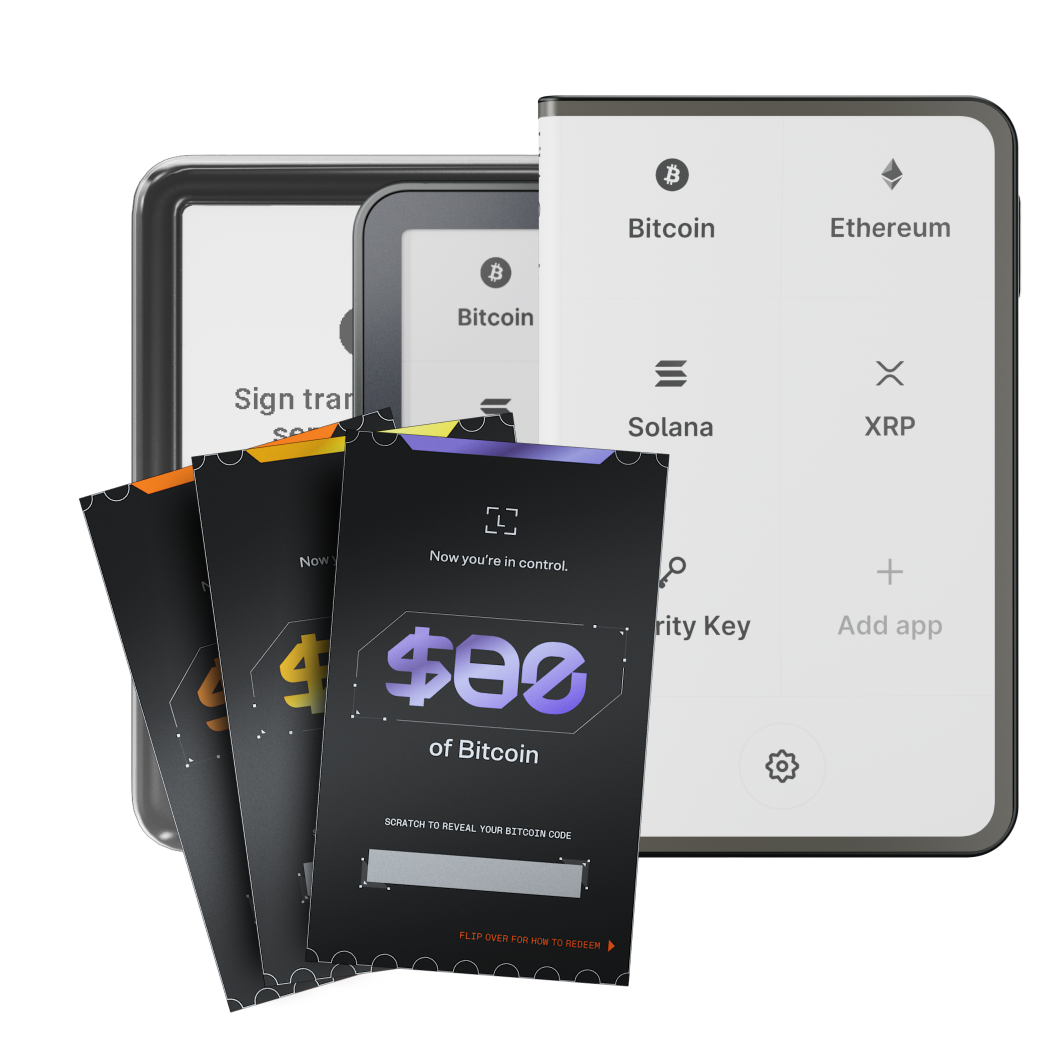
Get up to $80 in BTC and save big this Black Friday.*
Do you want to change language to ?
Beware of phishing attacks, Ledger will never ask for the 24 words of your recovery phrase. Never share them. Learn more
Get up to $80 BTC and discover this year's best deals on select Ledger signers.*
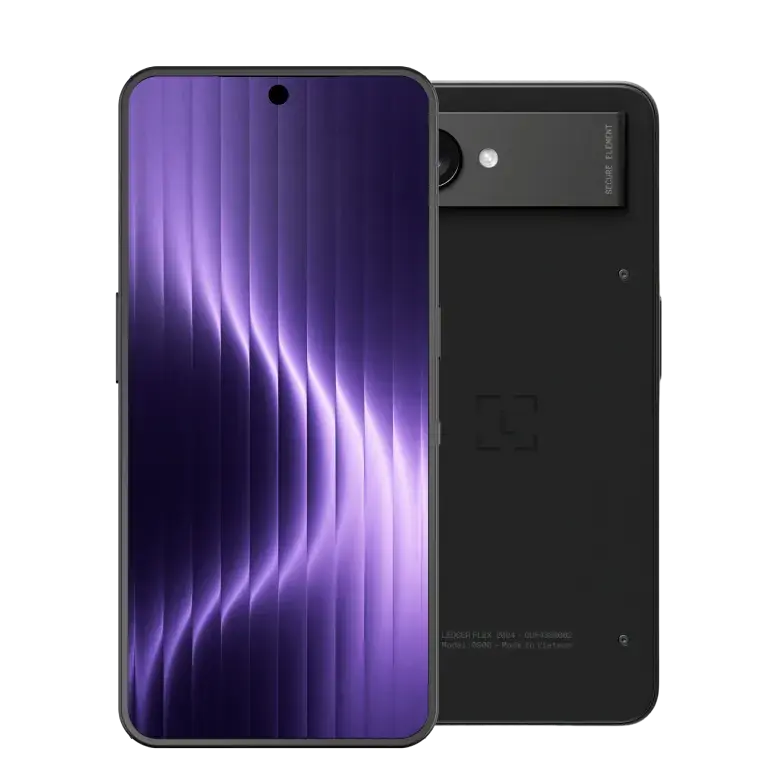
Industry leading security, the convenience of everyday apps*, and privacy all in one device
Learn more
Advanced threat detection, private backup, customization, and ease of use
Learn more
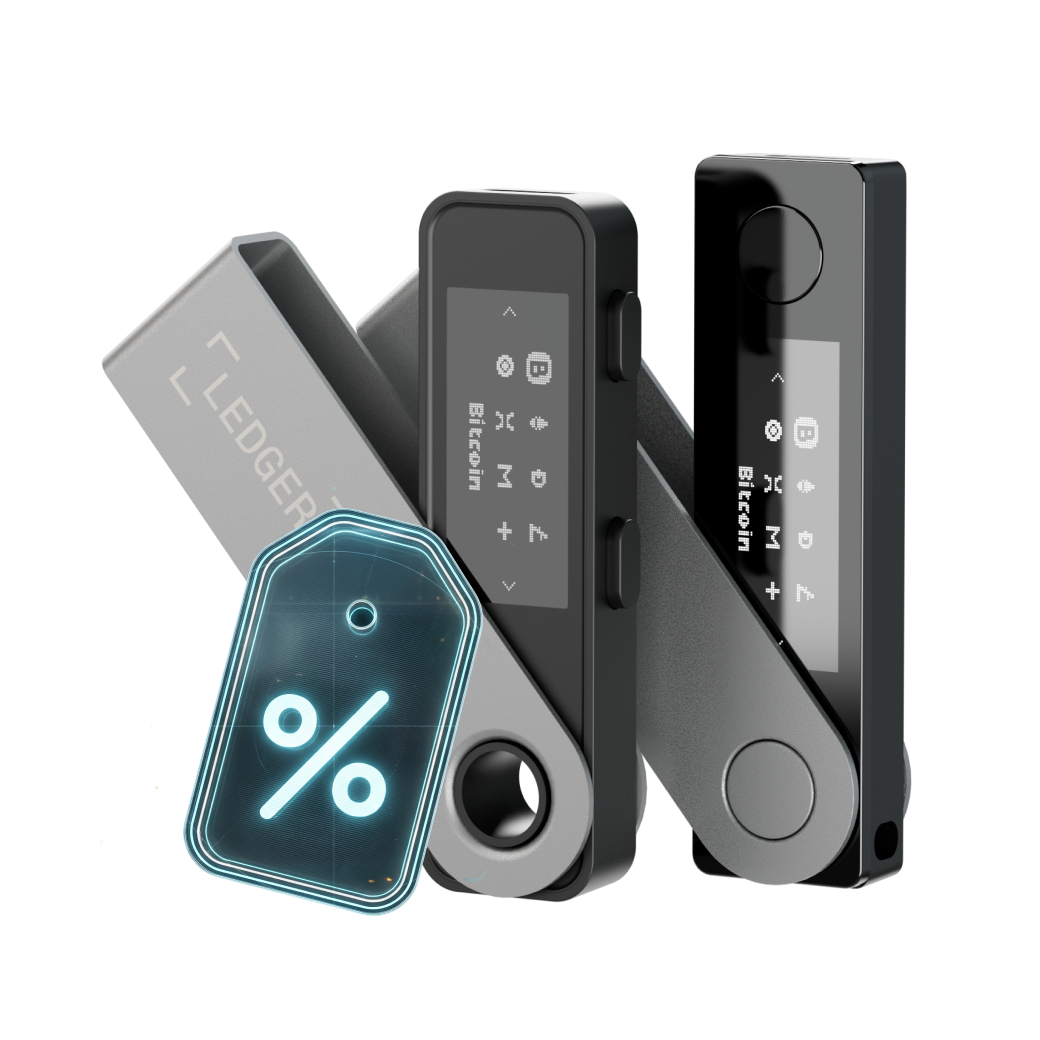
Iconic swivel design powered by Ledger OS™ with a compact screen and manual buttons
Learn more
I’m new to crypto
Get startedI’m an active trader
Discover pro features“Ledger = peace of mind. I'm sure some of us know that unsettling feeling when you know you need a Ledger but haven't quite organized yourself to get it sorted. If I did it all again, I'd start with having a Ledger.”
Janet Onagah @Janet_Oganah
"I got hacked in January and lost 1000s worth of NFTs. I felt disgusted, lost, and willing to quit. Until my friend told me he's ordering a Ledger. So, we bought the duo deal. Since then, I've been sleeping."
PrimeNic.eth @primenic_eth
“I use multiple Ledgers. Different colours = different uses.Public Wallet. Never touch long term storage. Day to day fund holdings. A back up just in case.”
winny.eth @winnyeth
"I have 3 Ledgers. Hot Wallet: minting/drawings etc. Main wallet: store most NFTs. Vault wallet: cold storage of crypto."
2160 @rekt2160
“I have 5 Ledger total. My personal NFT bag. 1 for testing. And 1 for each of my 3 daughters.”
Fanzo 🧢 11.11.22 @iSocialFanz
"If I could, I would name my Ledger Hagrid. Cause it's the keeper of my keys."
Petrica Butusina @PetricaButusina
"My Ledger is already called "Stew". As it is the steward who looks after my crypto & NFTs, so I can sleep at night."
Lkmland Crypto 💫 @LkmlandCrypto
"Ledger makes cold storage downright easy. My NFTs land infinitely safer and I don’t have to feel as paranoid about connecting to new smart contracts."
Matt Oney @MattOney93
Find answers to some of the most common questions.
Thinking about buying crypto or NFTs? You’ll need a crypto wallet.
When you create a wallet, two keys are generated: a private one and a public one. The wallet stores your keys and enables you to sign transactions, generate new addresses, initiate transfers, track portfolio balances, manage your crypto, and interact with dApps.
Crypto wallets come in many forms, from hardware wallets, like Ledger’s, to mobile apps that you can download on your phone or tablet.
When you buy crypto like Bitcoin and Ethereum, you’re issued two keys: one is public and the other is private.
The public key can be compared to a bank account number that you can share with third parties to receive crypto without worrying that your assets will be compromised.
The private key signs transactions and allows you to send and receive crypto. It’s crucial to keep your private keys secure and secret. If anyone has access to them, they will also have access to any crypto assets associated with those keys.
A crypto wallet stores your private keys and gives you access to your assets.
There are different types of crypto wallets, each with its own benefits and drawbacks.
Hot wallets are connected to the internet and usually convenient to use, however, they are also vulnerable to online attacks. Examples include web-based, mobile, and desktop wallets. Cold wallets keep your private keys offline and out of reach of online threats. Examples include paper and hardware wallets.
Wallets can also be categorized as custodial or non-custodial, depending on who holds the private keys. Storing your crypto in a custodial wallet means that a third party controls your private keys and, therefore, your assets. In contrast, non-custodial wallets, like Ledger’s, enable you to fully own and control your crypto.
Hot wallets store private keys on systems connected to the internet, which makes them susceptible to online attacks. Keeping your crypto on an exchange also means you have no true ownership or control over it. If the exchange files for bankruptcy or pauses withdrawals, you lose access to your funds.
Hardware wallets store your private keys offline, giving you full control and enhanced security. Even if you misplace or lose your hardware wallet, you can get a new one and use your Secret Recovery Phrase to access your assets.
Ready to get started? Here are the steps for getting your crypto wallet:
*Crypto transaction services are provided by third-party providers. Ledger provides no advice or recommendations on use of these third-party services.
Announcements can be found in our blog. Press contact:
[email protected]
New coins supported, blog updates and exclusive offers directly in your inbox
Your email address will only be used to send you our newsletter, as well as updates and offers. You can unsubscribe at any time using the link included in the newsletter. Learn more about how we manage your data and your rights.